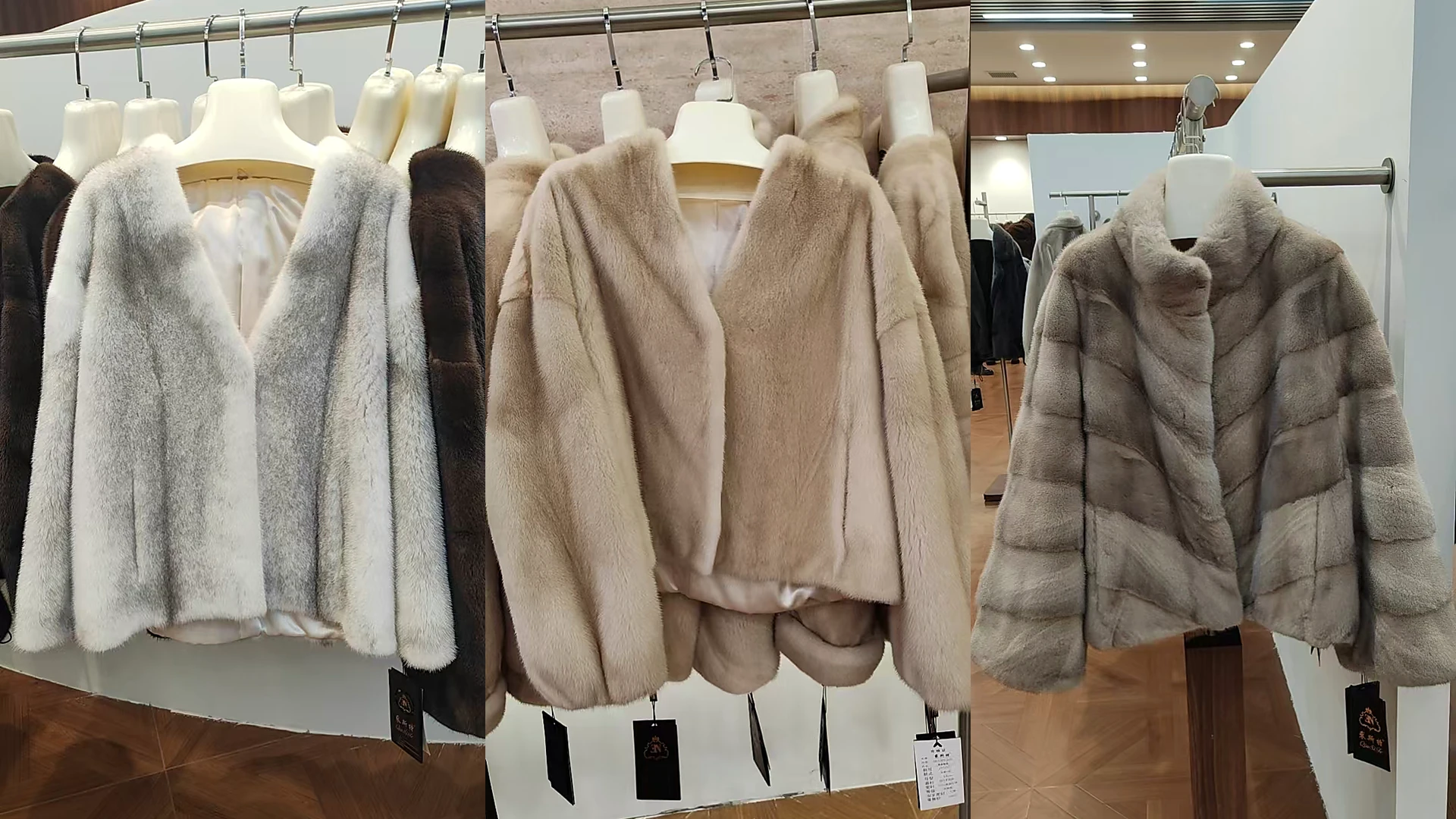
Choosing a fur coat manufacturer is not only a matter of comparing prices. A supplier may show attractive samples yet still be unable to repeat the same material, measurements, color, workmanship, labeling, or delivery performance in bulk production. For a wholesale buyer, the real question is whether the factory can turn an agreed specification into a consistent shipment.
This checklist is designed for brands, importers, wholesalers, and boutique buyers sourcing real fur, shearling, fur-trimmed garments, or faux fur. It can be used for a remote supplier review, a video audit, or an on-site visit. It does not replace destination-market legal advice, laboratory testing, or a formal social-compliance audit. It gives you a practical structure for asking better questions before you approve a sample or pay for bulk production.
1. Verify the Legal Supplier Identity
Start with the company behind the quotation. Ask for its legal name, registered address, business license details, factory address, export entity, and the name that will appear on the contract and commercial invoice. These details should be consistent across the quotation, bank beneficiary, invoice, packing list, and shipping documents.
Also clarify the supplier’s role. Does it manufacture the complete garment, perform only certain processes, or subcontract part of the work? Subcontracting is not automatically a problem, but it must be visible. You need to know who controls material purchasing, cutting, sewing, finishing, inspection, and packing.
For a remote audit, request a live video walkthrough rather than relying only on edited promotional footage. Ask the supplier to show the exterior sign, sample room, relevant work areas, quality-control point, and packing area in one continuous session. A showroom proves that products can be displayed; it does not by itself prove production capacity.
Record:
- Legal company name and factory address
- Contracting and invoicing entity
- Manufacturing steps completed in-house
- Processes handled by approved subcontractors
- Main contact for specifications and quality decisions
2. Define the Product Before Comparing Suppliers
“Fur coat” is too broad for a meaningful quotation. Two visually similar garments can differ in material species, grade, construction, lining, trim, length, density, dyeing, closures, and finishing. Create a sourcing brief that separates every component.
At minimum, specify the outer material, collar or trim material, lining composition, garment measurements, construction method, color reference, closure type, pocket details, labels, packaging, estimated quantity, and destination market. If the product is faux fur, identify the fiber composition and backing rather than using only a marketing name. If it contains real fur, use the correct common animal name and keep the supporting species and origin records available.
Do not ask a supplier to identify an animal species from a low-resolution photo. Visual similarity is not reliable enough for a compliance declaration. Material descriptions should come from verified purchasing and production records and, where appropriate, laboratory or documentary evidence.
3. Audit Material Traceability
Material traceability should connect the finished garment to the supplier’s purchase and production records. Ask how incoming materials are identified, separated, and assigned to orders. For dyed material, record whether the color is natural, dyed, bleached, or otherwise treated. For pieced construction, clarify whether the product uses whole skins, sections, or offcuts, because this can affect appearance, labeling, and buyer expectations.
A useful material file may include:
- Supplier and purchase reference
- Common and scientific species name when relevant
- Country of origin information
- Color and treatment record
- Batch or lot identifier
- Incoming inspection result
- Destination-market documents or permits when applicable
For international trade involving wildlife products, never assume that a familiar trade name proves the species is unrestricted. Check the accepted scientific name and current listing in the official CITES Checklist. If a species is listed, confirm the required permits or certificates with the competent authorities before shipment. CITES listings and national rules can change, and importing countries may impose requirements beyond the Convention.
4. Match the Label to the Destination Market
Labeling is not a finishing detail to solve after production. It should be reviewed during sample approval because the required wording, company identity, country of origin, care information, and placement can affect the label design and production file.
For the United States, the Federal Trade Commission explains that garments made entirely or partly with fur generally require disclosures such as the animal name, the identity or Registered Identification Number of the responsible business, origin information for imported fur, and whether the fur has been dyed, bleached, or otherwise artificially colored. Additional disclosures can apply to used, damaged, or pieced fur. Textile or wool components may have separate requirements.
For textile products offered in the European Union that contain non-textile parts of animal origin, Article 12 of Regulation (EU) No 1007/2011 requires the phrase “Contains non-textile parts of animal origin.” The regulation also addresses fiber-composition labeling for textile products. Product scope and country implementation still need to be checked for the exact garment.
Ask the manufacturer to build a destination-specific label approval sheet. Do not reuse one market’s label automatically for another.
5. Review the Development Process
A reliable fur garment supplier should be able to explain what happens between your first brief and the approved pre-production sample. The process may vary, but the decision points should be clear.
Typical stages include specification review, material confirmation, pattern or sample development, first sample, buyer comments, revised sample, size set when required, pre-production sample, and bulk release. For ODM styles, confirm which parts of the existing design can be changed. For OEM projects, define who owns the pattern, artwork, labels, and technical files.
Ask what information freezes at each approval. If you change the material, length, lining, or closure after approval, the supplier should explain the cost, timing, and quality implications before proceeding.
6. Turn the Approved Sample into a Measurable Standard
“Same as sample” is not a complete production instruction. Create a golden-sample file that translates the approved garment into measurable checkpoints.
The file should include a dated sample ID, photos from consistent angles, garment measurements and tolerances, material references, color standard, construction notes, stitch and seam requirements, lining details, closure placement, pocket position, label artwork, packaging method, and a signed comment history.
For fur and high-pile materials, photograph the direction of the pile, panel layout, visible color variation, and matching expectations. Natural materials can vary, so the buyer and factory should agree which variation is acceptable and which is a defect. Without this agreement, inspectors may reject normal variation or accept a result that does not fit the brand’s visual standard.
7. Examine Workmanship at the Sample Stage
Inspect both the outside and inside of the garment. A flattering front-view photo can hide uneven seams, weak closures, lining tension, mismatched panels, or poor finishing.
Check:
- Overall balance and left-right symmetry
- Panel matching and pile direction
- Seam strength and clean joining
- Armhole and shoulder shape
- Sleeve length and cuff consistency
- Collar roll and attachment
- Pocket position and reinforcement
- Hook, button, zipper, or snap security
- Lining ease, attachment, and hem behavior
- Loose threads, visible adhesive, stains, odors, and surface damage
Test the garment through normal handling. Open and close every fastening repeatedly, place hands in the pockets, raise the sleeves, and hang the garment for observation. The objective is not to damage a sample but to identify problems that photographs will not reveal.
8. Check Color and Lot-Control Procedures
Color variation is a common source of dispute, especially when natural materials, dyed batches, mixed panels, or repeat orders are involved. Ask how the factory approves color and separates production lots.
Use a physical color reference when possible. Record the lighting conditions used for approval and whether the standard is a material swatch, lab dip, approved sample, or named color code. For a collection using several garments, define whether all pieces must match one master standard or whether controlled shade groups are acceptable.
Ask the factory to keep retained swatches or sample references from the approved lot. If a repeat order will use new material, treat color as a new approval rather than assuming an exact match to a previous season.
9. Evaluate Quality Control as a System
“We check every piece” is not enough. Ask where inspections occur, who performs them, what checklist is used, how defects are classified, and what happens when a problem is found.
A practical control plan can include incoming-material inspection, first-piece confirmation, in-line checks, final measurement, appearance and workmanship inspection, label verification, metal or needle-control procedures where required, packing verification, and shipment release. The exact plan should reflect the product risk and buyer requirements.
Agree in writing on defect definitions and sampling rules before the inspection. Critical, major, and minor defects should have product-specific examples. A missing or incorrect legal label may be more serious than a minor cosmetic variation. If a third-party inspection is required, confirm the inspection level, acceptance criteria, booking responsibility, and reinspection costs in the purchase agreement.
10. Test Capacity Against Your Real Timeline
Do not evaluate capacity only by asking for a monthly number. Capacity depends on material availability, style complexity, sample approvals, workforce, subcontracting, and the factory’s other confirmed orders.
Build the timeline backward from the required delivery date. Include specification confirmation, material booking, sample rounds, buyer approval time, label and packaging production, bulk manufacturing, inspection, rework allowance, export documentation, and transport. Ask which event starts the lead time: deposit, final artwork, approved sample, confirmed material, or all of these.
A credible supplier should identify the critical path and explain what changes if an approval is late. Treat a very short promise without assumptions or dependencies as a risk, not an advantage.
11. Inspect Packaging and Export Readiness
Packaging should protect the garment without crushing its shape, trapping moisture, or creating avoidable odor and surface damage. Ask for a packing sample or video before bulk packing begins.
Confirm garment folding or hanging method, inner protection, moisture-control approach where appropriate, carton dimensions, quantity per carton, gross and net weight, carton marks, barcode placement, and any destination-specific material restrictions. Make sure care instructions and labels remain readable and attached after packing.
Review the commercial invoice, packing list, product descriptions, country-of-origin information, and permit or certificate references for consistency. The description used by production, labeling, customs documents, and buyer records should not contradict itself.
12. Audit Communication and Corrective Action
Production problems can occur even in experienced factories. The decisive question is how quickly the supplier identifies, documents, and corrects them.
Before ordering, send a small set of detailed questions and evaluate the response. Does the supplier answer each point, flag missing information, and separate confirmed facts from estimates? Or does it reply only with “no problem” and a price?
Agree on one controlled specification file, named approvers, response times, change-log format, and escalation contacts. When a defect occurs, request a corrective-action record describing the issue, affected quantity, containment, root cause, repair or replacement decision, and prevention step. This turns quality management into a repeatable process rather than a series of chat messages.
A Simple Supplier Scorecard
Score each area from 0 to 2: 0 means no evidence, 1 means partial evidence, and 2 means clear, verifiable evidence. Use the same scorecard for every candidate.
- Legal identity and manufacturing scope
- Material specification and traceability
- Destination-market labeling readiness
- Sample-development control
- Golden-sample documentation
- Workmanship quality
- Color and lot control
- Quality-control system
- Capacity and timeline realism
- Packaging and export documentation
- Communication discipline
- Corrective-action process
The total score is less important than the pattern. A supplier with an attractive sample but no traceability, labeling process, or change control creates a different risk from a supplier that documents well but needs one workmanship issue corrected.
Frequently Asked Questions
Should I visit a fur coat factory before placing an order?
An on-site visit can provide stronger evidence, but it is not the only option. Start with document checks, a continuous live video walkthrough, a paid sample, and clear inspection criteria. For larger or higher-risk orders, an on-site or qualified third-party audit can be a sensible additional control.
What should I send when requesting a quotation?
Send the style or reference, material specification, garment measurements, color, estimated quantity, destination market, required delivery window, labeling needs, and customization scope. If some fields are unknown, mark them as open questions instead of allowing assumptions.
How do I compare quotations from different fur manufacturers?
Normalize the specification first. Compare the same material, construction, lining, trims, labels, packaging, inspection, trade terms, and delivery assumptions. A lower number is not comparable if important components or services are excluded.
Can a factory confirm the species from a photo?
A photo may support an initial discussion, but it should not be the basis for a formal species declaration. Use verified supplier records and, when necessary, expert or laboratory identification and destination-market documentation.
What are the three most important checks before bulk production?
Confirm the complete specification, approve a measurable golden sample, and agree on the quality-control and inspection plan. These three controls reduce ambiguity across materials, workmanship, and final acceptance.
Final Takeaway
A good factory audit converts promises into evidence. Verify who is producing the garment, define each material and component, approve a measurable sample, check labeling for the destination market, and agree on inspection and corrective-action rules before bulk production.
LINHUA supports wholesale and private-label discussions for fur apparel with flexible order planning. To discuss a project, send the style, estimated quantity, and destination market through WhatsApp: https://wa.me/8618632665326
---
Official References
- U.S. Federal Trade Commission: How to Comply with the Fur Products Labeling Act
- EUR-Lex: Regulation (EU) No 1007/2011, including Article 12
- CITES Checklist of Species
Requirements can change and destination markets may impose additional rules. Confirm the final product and shipment with the relevant authority or qualified adviser.